A Stitch in Time
Oil · 2017 496 views
- 0% commissionAgree directly with the artist: the full price goes to them.
- Answers within 48 hWe remind artists who don't answer. Messages are translated automatically.
Details
- Category
- Painting
- Medium
- Oil
- Dimensions
- 43 × 48 in
- Year
- 2017
- Edition
- Unique piece
- Framed
- No
- Signed
- Yes
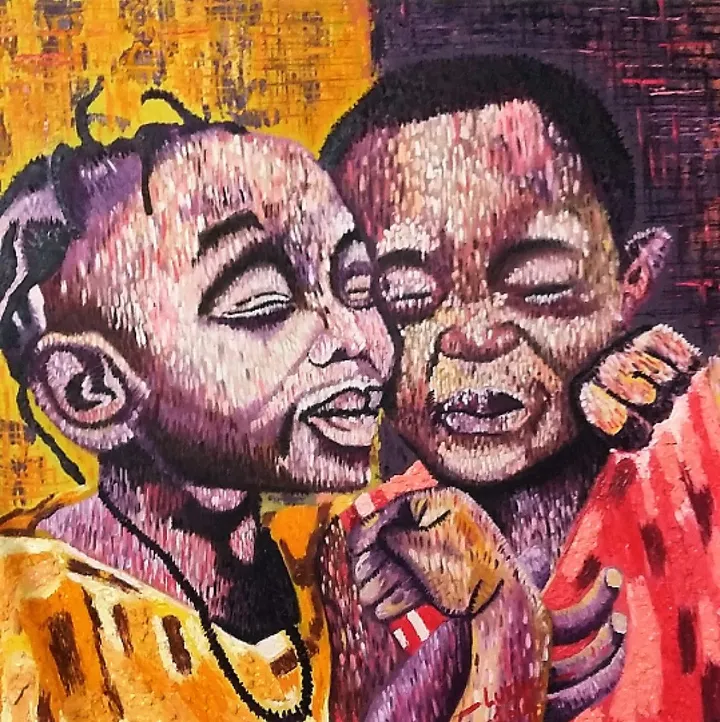
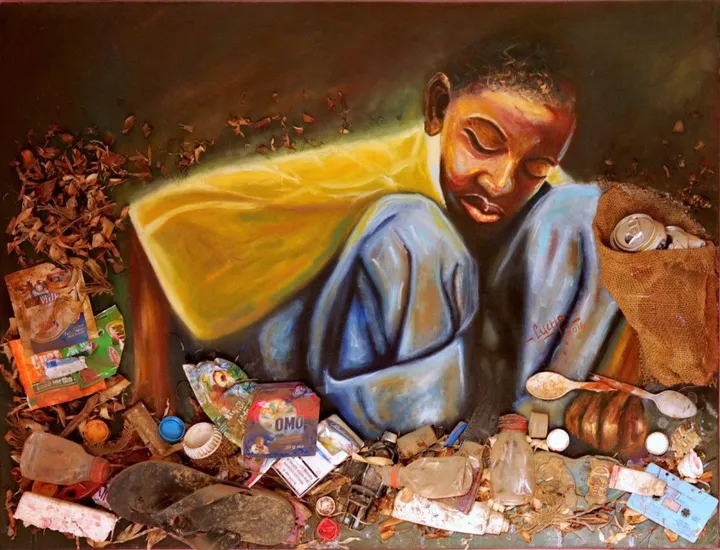
They say a stitch in time saves nine. In this painting I am talking about how children are like the future, the leaders of tomorrow. The future of every country lies in the hands of the children. In other words, the children should be treated with care and they should be guided in good ways. This is how we get good leaders tomorrow, and a greater nation in times to come. Now in my place, children are also trying by themselves to make the place better. They hustle, doing their assignments, doing hard work so that they don’t starve. Some children, even though it’s against our law, some go hawking to put food on the table. They go around with baskets or trays on their heads, selling mangos, oranges, bananas, corn, groundnuts, sachet water. Some even engage themselves in some activity, like washing clothes for others to get paid, fetching water for others, washing cars too. Now kids go through all this in order to make sure that tomorrow becomes better. How can we help them?
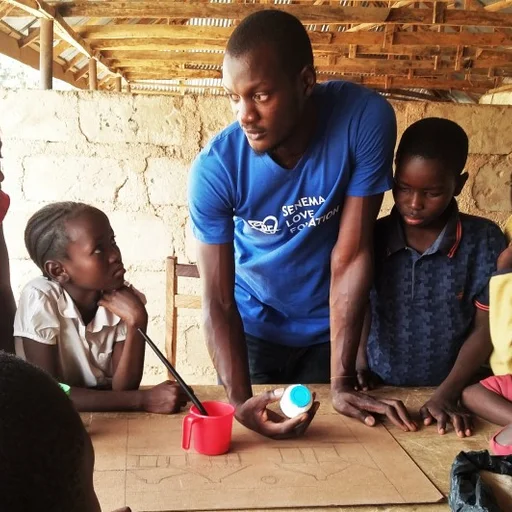
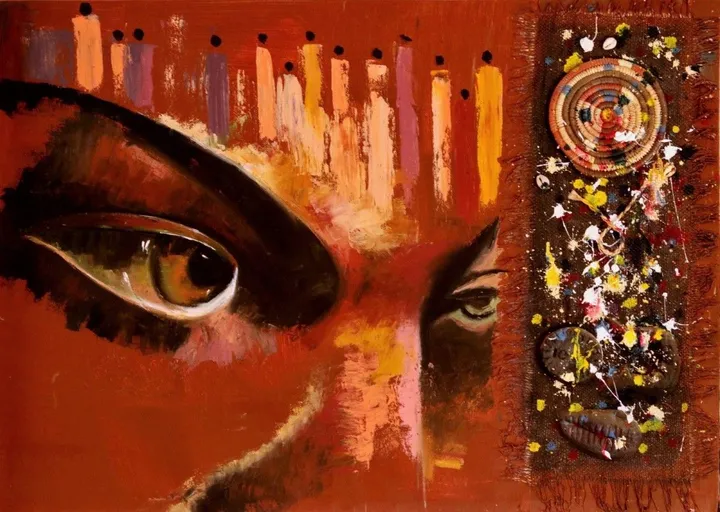
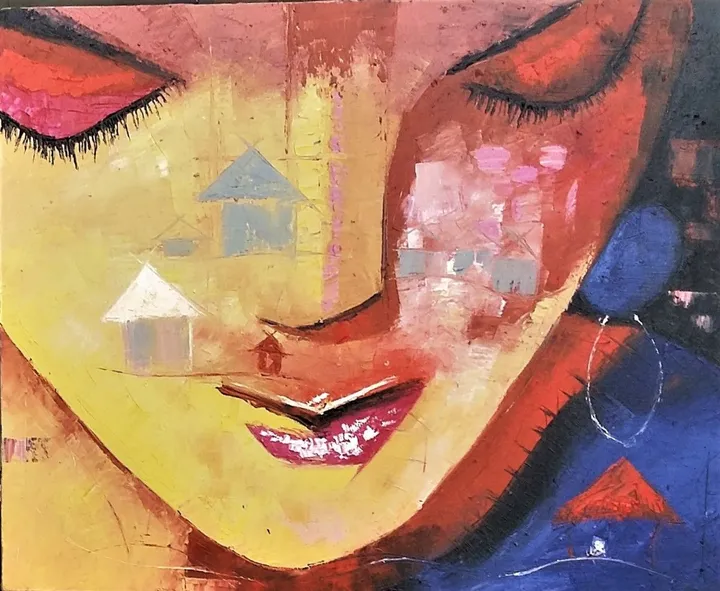
Many peacebuilding and development professionals work from their offices for governments or NGOs. Emerging artist Luka Chohu (also known as Lucho) works out of his own small compound in the community of Angwan Juma’a, Jos, Nigeria. This is a place where people “hustle” from morning till night to provide for their families – a place where art is generally not encouraged as a viable career path. To be sure, this artist does his fair share of hustling. But in between, he finds time to stretch old sheets over hand-made wooden frames to engage in his own form of peacebuilding and development work. From his small studio, Lucho fuses his artistic talent with his passion for social justice, to communicate the joys and challenges of everyday life in Nigeria; promote peaceful coexistence; and develop the capacities of those around him. His interest in art began in secondary school: “I always had a story to tell. But because I was not good with words or numbers, there was no way for me to tell it.” He therefore began using paint to express his own experiences and feelings. Following secondary school, Lucho moved to the capital to understudy Abuja-based artist, Kelvin Ubani. He then began using his new skills to move his art into broader themes of social justice, inter-identity peacebuilding and the beauty of Nigerian cultures. The purpose of Lucho’s work is twofold. First, using various media, his own art beautifully and honestly presents the paradoxes, joys and challenges of everyday life in Nigeria. It acts as means for himself and others to step back from the daily “hustle,” make sense of what is, and imagine what could be. In the end, what is produced are pieces with both aesthetic value and the ability to communicate such realities to both local and international audiences. Second, Lucho dreams of also using his talent to increase the creative and communicative capacities of others, particularly children in Jos who cannot access proper education, either because of displacement or poverty. Through volunteer work with local NGOs and schools, he has begun gaining experience in this area creating programs for internally displaced and local children learn how to use art to express and value themselves. Truly, Lucho lives as an artist, a development worker, and a peacebuilder.