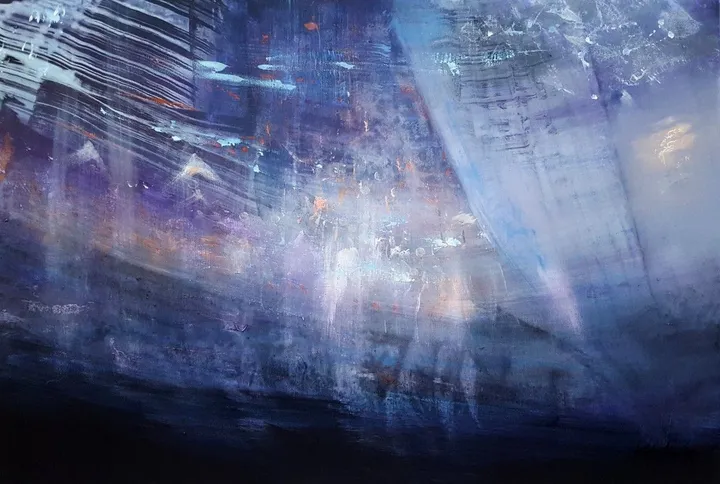
DARK BEAUTY UNIVERSE EXPANDING MINDSCAPE DARKSCAPE ABSTRACT LIGHTSCAPE KLOSKA
Acrylic · 2018 634 views
Title: from the series " Between the Black and Divine " - " Composition 2 ", signed on January 2018 Tehnique: acrylic painting on stretched canvas / borders are painted black / READY TO HANG ! painting size: 140 x 80 cm / VERY LARGE SIZE ! signed 2018 MORE BEAUTIFUL ARTWORKS ON OFFICIAL GALLERY WWW.KLOSKART.COM / SPECIAL DISCOUNTS ! Last review from the personal paintings exhibition "Alone, to the invisible touch", April - May 2015 "Ovidiu Kloska or the DYNAMIC of the IMAGE When we approach to the works of Ovidiu Kloska, we focus our attention on a few elements. The first is a tireless desire to experiment techniques, ways of approaching bold plastic, facilities, graphics, drawing, mixed techniques. Interestingly series "The wear of the city", an attempt to use the common places, as the artist says, that transfiguring them to discover the artistic connotation of urban space and its implications in the way of perceiving life beyond reality immediately. The creation of Ovidiu Kloska express a restless, but avid contain as much of the material world, visible and invisible. Relating to art history can approach to a certain extent what it animates the artist of the Romantic vision. Or maybe neo-romantic, of course with all data postmodernism. Art of states freedom of expression and the desire to own individuality with a certain exacerbation. But it is even more than that. It is an anxiety which is included in intangible and fixed the artistic object metaphysical meanings. In fact, the term "fix" is very inappropriate for the artistic approach of Ovidiu Kloska. Images created by him, often human images have a constant flow, have a non-finite that we encounter in Turner's paintings abstract painting or informality, although the atmosphere is released from them is different. As the artist expresses and captions or titles given sometimes works or cycles created the oniric dimension is always present in his approach to the visual. There is a dynamic shape or form captured in constant metamorphosis, change that it captivates the viewer and I send those fears that it will be exalted and the artist. Can any 'anxiety' is not the best because I see the universe created by Ovidiu Kloska a depressive effect. There is a restlessness of str?baterii spaces. Space, spaces of matter of knowledge. There really is and this component: a hurry to reach spiritual essences, primary responses. No, the answers seem to be the subject of his works but the road to it, the whole process with its inner dynamism. How he performs eye? I think that the solutions offered by el- solutions in this moment, because it does not seem an artist to settle for a formula without exploring beyond the EA are quite diverse but unified in terms of style. First it is a variety of materials. Then a recovery of plastics. What we have before us, informality, the game between abstract and figurative sense of decaying matter or transformation, halos surrounding the figures, the alternation of light and shadow, all this is a true exploration of matter, pictorial matter, are a affirmation of the material world. But paradoxically, by the treatment she receives a spiritual dimension and the continuous sliding between material and spiritual is the internal dynamics of the image that captivates us. Quick brushing, gestualitatea that builds and deconstructs form, vibration and light pictorial paste or shadow contained, everything has a vivacity of the movement that it asks the viewer and it integrates artistic process seems to take place in his presence. The artist gives shape to human forms, figures, which he also seems to challenge them. Le coagulates in a universe which is in constant becoming, a mysterious universe. It is a creation made into imminent revelation artist whose approach captures and communicates the images we often surprising."
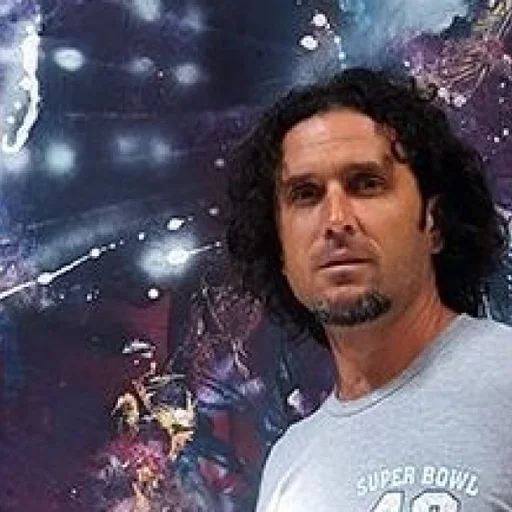
KLOSKA (Ovidiu Closca) born in Romania, Neamt district,in a small town in N-E of Romania at 27 of july 1977. In 2000 he graduated the Technical University "Gheorghe Asachi" from Iasi, Romania, Faculty of Electronics and Telecommunication. In 2009 he graduated master classes at "George Enescu" Art University from Iasi, Faculty of Fine Arts with the project "Urban wear - oniric interferences - object of art". Lives and creates in Focsani, Vrancea district from Romania. "I cannot imagine how one can possibly see behind this work how much time and effort it took for me to develop this unique space that defines me now. I have discovered angels when I almost got drowned three times the same summer and I pray every time at dawn for God to exist. I have discovered real art in Iasi galleries an in the art albums from the second-hand book seller on Lapusneanu street. I have started then sleeping on pillows smelling like linen, with canvas on the walls and under the bed. I have never eaten paints, though in the first grades I drunk the water for the aquarelle. And here I am, young, continuously wandering and dedicated, sending invitations to an imaginary park for preserving the soul. Most of the plastic themes used, the symbols and shapes included in my work, are taken out from a reality spoiled by time, and then they are reshaped in a special way in my opinion. The most important theme is the wall. Constantly fascinated, this dynamism of shape opens up in a unique way, by projecting a sway of mind, a mind performance with neurological circuits. This is my “magic eye”.I believe that by uniqueness begins with the very capacity of inventing universe out of things shattered by time, things that have changed into ephemerity. There are hours that I spend staring at the mud, at the wrinkles of the trees, at the rust of walls damaged by time. It is an exercise that everybody should make. It means worming the spirit, getting in touch with the sublime. I am connected to silence and endless time during the short chat between things. Sublime. Esoteric. … And the night… that cold, fascinating light that makes things change their meaning, driven by an inner tremble that is known from a previous moment, fluttering through images. My visual relates with dreams, unconsciousness, delirium, hallucination, with the change of shape and light, with the spontaneous, illusion, abnormal and normal, bizarre and wear. My name is KLOSKA and I will be you host during your visit to the park of preserving the soul. FREE ENTRANCE! " Review from "ALONE TO THE INVISIBLE TOUCH " Exhibition April 2015 "KLOSKA OVIDIU OR THE DYNAMICS OF THE IMAGE When approaching Ovidiu Kloska’s works, our attention focuses on certain elements. The first would be a tireless desire to experiment techniques, bolding plastic ways approaches: installations, graphics, paintings, mixed techniques. “The Wear of the City” is an interesting series; an attempt to use common places, as the artist says, so that by transfiguring them, to reveal the artistic connotations of the urban space and his facets regarding the way of perceiving life beyond the immediate reality. Ovidiu Kloska’s creation expresses a restless, but avid spirit that wishes to encompass the best of the visible and invisible material world. Taking into consideration Art History, we can behold, to some extent, what animates the artist towards a Romantic vision or maybe towards a Neo-romantic one which, of course, includes all postmodernist data. His art asserts freedom and his somehow exacerbated desire to express his individuality; but it is even more than that. It is the anguish to include the intangible and to imbed metaphysical meanings within the artistic object. In fact, the term “to imbed” is very inappropriate when discussing Ovidiu Kloska’s artistic approach. The images he creates, frequently human images, present a constant fluidity, a non-finite that we encounter in Turner’s paintings or in the informal of the abstract painting, although the atmosphere they liberate is different. As even the artist sometimes expresses it in the captions or in the titles given to his works or in the series, the oneiric is an always-present dimension in his visual approach. The dynamism of the form or shape captured in a constant metamorphosis is a change that captivates the viewer and impregnates him with those anxieties that dominate the artist. Maybe “anguish” is not the most appropriate term, since I do not perceive any depressive effect within the universe created by Ovidiu Kloska. There is the unrest that comes with space crossing: cosmic and material spaces, spaces of knowledge. This element really exists: a rush to reach spiritual essences, primary responses. No, answers do not appear to be the subject of his works, but the itinerary towards them, the whole process, along with its internal dynamism. How does he perform it visually? I think that the solutions he offers – the present time solutions, because he does not seem to be an artist who settles for a formula, without exploring beyond it – are quite different, but stylistically unified. First, there is the diversity of materials and, second, the valorizing of plastics. What we have before us, the informal, the abstract-figurative game, the sensing of the decomposing or transforming matter, the halos surrounding the figures, the light and shadow alternation, represent a real exploration of the matter, of the pictorial matter, an affirmation of the material world. However, paradoxically, through the manner in which it is treated, it receives a spiritual dimension, this continuous sliding between the material and the spiritual being the internal dynamic of the image that captivates us. The quick brushing, the gestuality that builds and deconstructs the form, the pictorial vibration of the paste and the contained light or shadow – everything moves vivaciously, soliciting and integrating the viewer in the artistic process that seems to take place in his presence. The artist binds human silhouettes, figures, which he seems to challenge. He binds them in a constantly budding and mysterious universe. It is a creation accomplished under imminent revelations whose approach, captured by the artist, is communicated to us in often surprising images." Art critic Mariana Tomozei Coco?