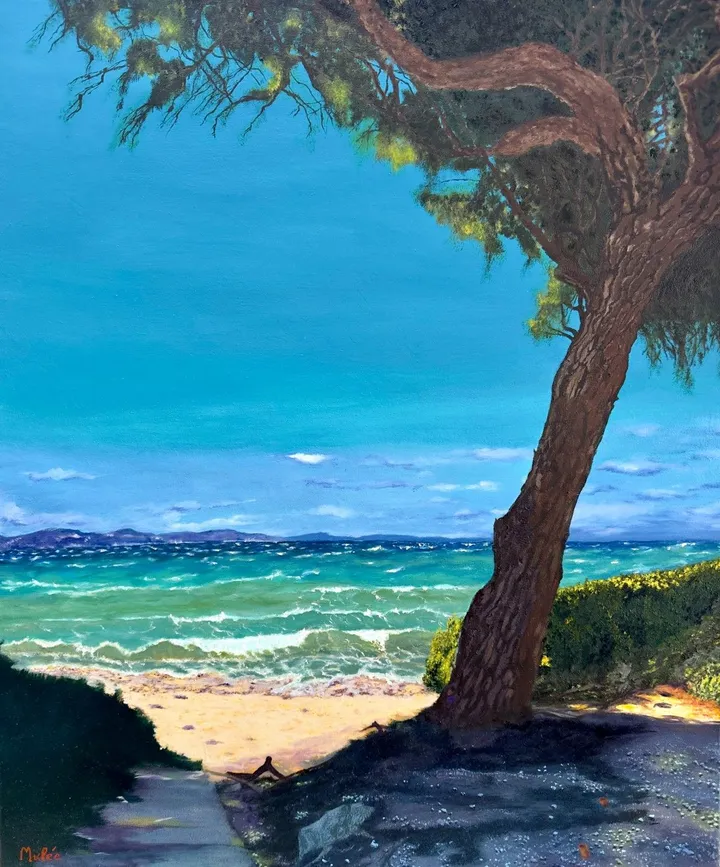
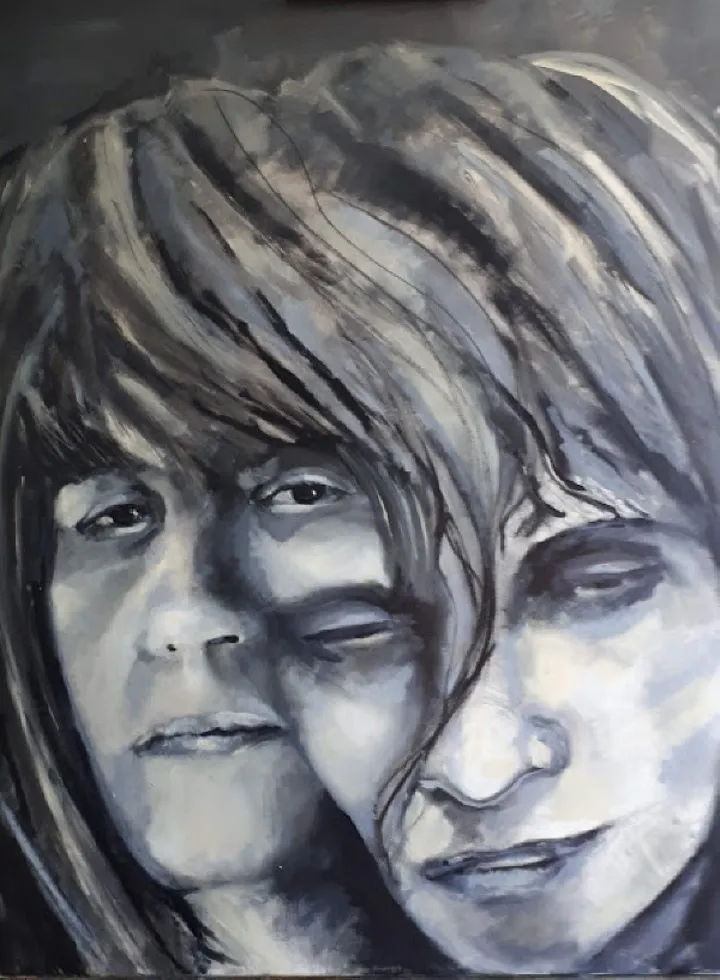
Gift of a Memory
Huile · 2017 572 vues
- 0 % de commissionEntendez-vous directement avec l'artiste : tout le prix lui revient.
- Réponse en 48 hOn relance les artistes qui ne répondent pas. Les messages sont traduits automatiquement.
Caractéristiques
- Catégorie
- Peinture
- Médium
- Huile
- Dimensions
- 101,6 × 152,4 cm
- Année
- 2017
- Édition
- Pièce unique
- Encadrée
- Non
- Signée
- Oui
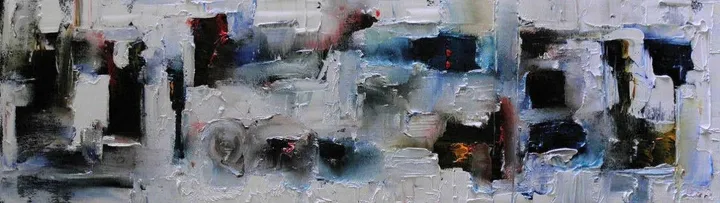
The language of lyrical abstraction interpreted... by Michael Bouger 2008 Stefan Fiedorowicz, a Canadian now residing in Vienna Austria has amassed a most impressive resume with shows spreading out from Canada, United States and Europe. Fiedorowicz's work has often been compared to the great modernists of the past following the notable style of lyrical abstraction, a term meaning an opening to personal expression. While perhaps a compliment, this also seems a disservice to his striking talent. The emotion in my work comes from somewhere deep down, and can speak to the inner part of each person... My work is intuitive; colour is the language that I use to express an emotion. It is the interaction of colour that interests me. Fiedorowicz possesses something more than a painter following in the footsteps of others before. There is a supreme depth to his work that captures a newer sense of Modernism, something that is sadly missing from the current art scene. His shapes and lines infuse his paintings with a richly exotic symbolism of style. There is purpose and psychology to his work, conveying a sense of confidence from a broad spectrum of experience. Fiedorowicz's distinction as a modern painter is in his grace and amplitude in creating works that are engaging and powerful: They make more than a mark - they make a statement generating alluring and fascinating canvases. MICHAEL BOUGER is a freelance arts writer. Thesis Interview with lyrical artist Stefan Fiedorowicz Personal Influence 1. Who are the artists (both contemporary and historical) that you can truly say have been a significant influence on your personal work? Describe why for each artist. I would have to say that Kandinsky would be my all time inspirational artist. I have seen many exhibitions of his work, just recently in Munich, I have seen why he is considered to be the founder of abstract art...in fact he was the first to have ever done an abstract....... 2. Do you believe that influences outside a major discipline, such as painters being influenced by installations or printmaking, are beneficial to the overall process of painting and why? 3. As an abstract artist, are you drawn to others abstract pieces or more realistic artwork? Do you think this decision is a conscious or subconscious decision? Artistic Process 1. Which colors do you find yourself using the most often and is there any particular reason? I love ochre, alarzin crimson, and Vermillion Red......Orange Chrome.....It is the interaction of these colours that interest me. Red of course expresses passion.... 2. When recognizable figures or objects emerge in your work, however rare this may be, do you automatically paint them over or do you take time to think about the items overall effect before making a decision? I have found that most viewers always attempt to find something recognizable in a piece of work. This is how we are as humans...we are driven by the need to put meaning to things. I often hear people making comments as Oh, I see a ...........or that looks like a............Abstract art i think needs to be exactly what it is...Abstract......it makes people think more and dig deeper into a piece of work to find its abstract meaning. Rarely do I like to leave something that is recognizable in a piece of work. it is the colour and shape that interests me and how the colour interacts. 3. Do you use other items other than brushes, such as palette knives, to create texture in your work? Do you prefer visual or actual texture and why? I mostly use palette knifes to obtain highly textured effects. I apply thick oil to obtain actual texture. The texture enhances emotion, in my belief, and gives depth and sometimes more meaning to a piece of work. 4. How much do you believe in the idea of pre-planning a canvas and how much are you willing to allow that idea to change as the painting progresses to a finished piece? I do not entertain this belief of pre-planning a piece of work. Abstract art I believe should be spontaneous, whatever comes out, comes out. Lyrical abstractions are done in this way. As a work progresses it has to be for me something that is appealing and right. I usually know when it is right....There are times when I have been completely dissatisfied with a work and change it completely or sometimes a bit. but the finished result must make a statement, it must move something inside the viewer. Abstract possibilities are endless and after each mark is made on the substrate, I have to make a decision of what comes next. In realism, one knows where the painting will end up. This is the part of my work that is the most thrilling to me...What happens next? Lyrical abstractions requires the viewer to contemplate, study and ask themselves "what am I feeling"? I enjoy being a part of the interactive experience with the person viewing a piece of my work. 5. How important is the title in your work? Do they start out in the original phases of painting or are the final piece to the puzzle as the finishing touch? Yes, I do believe the title is essential. what it essentially does and especially for lyrical abstract work, it assists in giving the viewer some sense of meaning. I enjoy listening to music when I paint, and at times I may chose a lyric from a song or title of a song as the painting's title. I love poetry as well and may chose a line from a poem, or i just play around with words to come up with something that is catchy. Sometimes these modes of giving a title can abstract in themselves. Just to give a few examples, Secret Melt.2010 it is about a love affair, or Her Shadow Still Lingers Here, a work inspired by my feelings when I remembered my mother's death. or The Night Is My Companion. a feeling of despair. 6. Is a piece of work ever truly finished? If so, why? Someone once said, a finished painting is a dead painting....I suppose this is true in some respects. an abstract painter is always expressing themselves on canvas and the process of art is continous Art must be, somehow, essential for life. Art is part of the human spirit..... 7. In your personal studio, how do you work? Do you prefer silence or background noise? I approach a blank canvas as if I was a matador confronting a bull, it is frightening for me, the canvas is my palette. I squeeze oil paint onto the canvas and usually this is where some method comes into it. I place the colours that I have chosen next to one another and start working the oil, attempting to pull out the essence of the colour by working it over and over again....As mentioned earlier I prefer to paint with music, but at times I chose to get lost in silence a silence that can be heard, and it is just the canvas and me with no distractions...It all depends on my state of mind I suppose. 8. Do you work on more than one piece of work at a time? yes, if it is a series I am doing, I do work with more than one canvas at a time. If I am not satisfied and beginning to feel frustrated I will leave it and start a new painting and then eventually come back to it to finish it. 9. How important is size to your work? In general, how much importance do you think size has on abstract work? Do you believe that abstract work is meant to swallow the viewer by its size or instead be small enough to look for something more? Size I believe does play a significant role in a piece of work but I rarely use large canvasses, just for practical reasons. I like doing small pieces, a small piece can say alot more....my largest canvass has only been 120 x 100cm...which is not huge but I have enjoyed doing large canvasses. i believe the size does have to represent the essence of what the abstract work is meant to show or evoke. 10. Describe your process in depth from initial concept to finished piece. Personal Objectives 1. Are your paintings i
 Georgios Malisianos
 Eva Fellner